
Car Loan Refinance After Natural Disaster or Flood Damage
Car loan refinance after natural disaster or flood damage depends on title status and insurance gaps. Learn how to time your application and protect your budget.

By Nicole Bennett
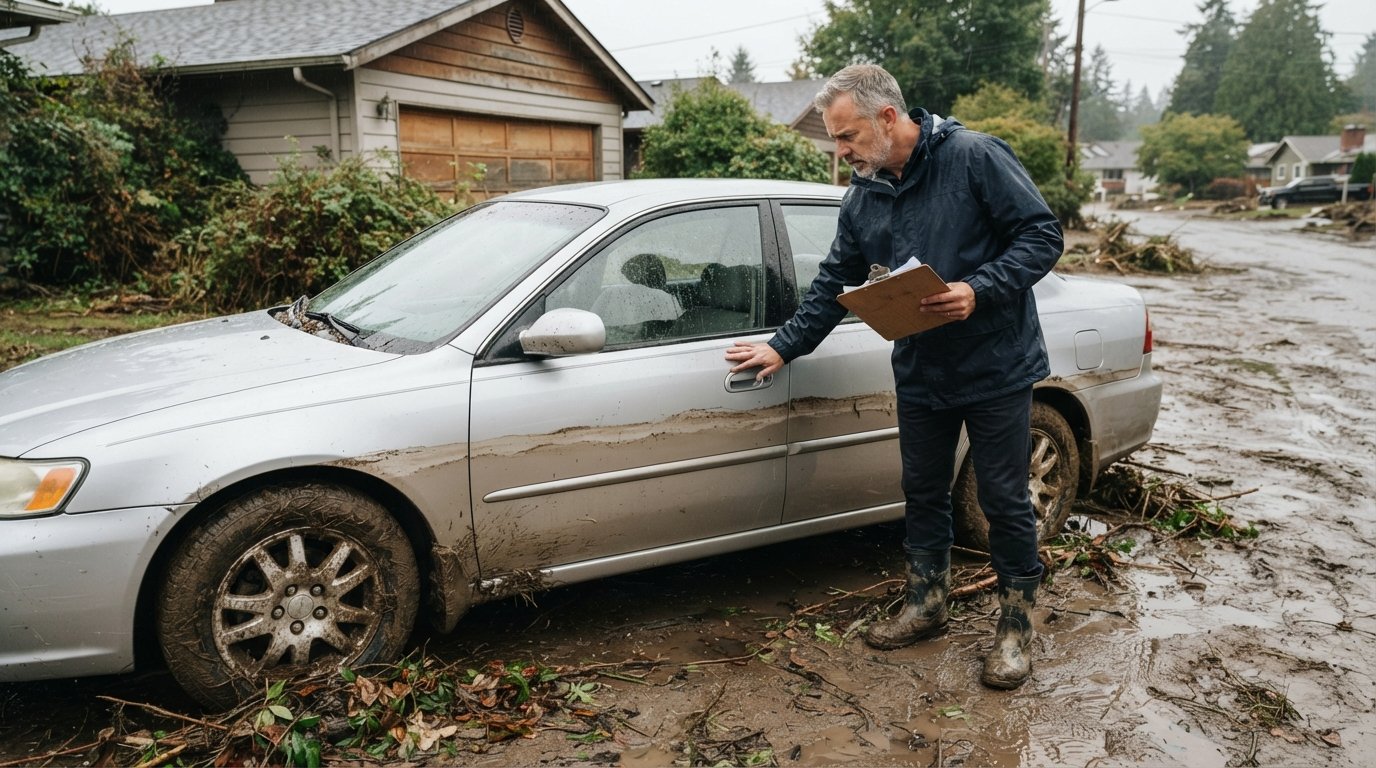
A flooded driveway, a water line halfway up the doors, and an insurance adjuster who has not called back yet: that is the scene many vehicle owners face after a hurricane, wildfire, or flash flood. In the middle of that chaos, the last thing you want is a car payment that feels disconnected from the car sitting in your driveway. Yet that payment keeps drafting, and the vehicle may be worth far less than what you owe. This is exactly where a car loan refinance after natural disaster or flood damage enters the conversation, not as a magic fix, but as one tool that may help you restructure what you owe, buy time, or align your loan with the vehicle's real condition.
Refinancing a damaged vehicle is not the same as refinancing a clean one. Lenders look at title brands, insurance settlements, and repair documentation. Some borrowers discover that refinancing is impossible until repairs are complete or the title is cleared. Others find that a refinance can lower a payment just enough to absorb a repair deductible or a rental car bill. The difference comes down to timing, documentation, and understanding how lenders view risk after a disaster. This guide walks through the decisions that matter most, from salvage titles to insurance gaps to disaster relief programs, so you can move forward with a clear plan instead of guesswork.
How Salvage and Branded Titles Affect Refinance Eligibility
When a vehicle is declared a total loss, the insurer typically pays the actual cash value and takes possession of the car. If you keep the vehicle through a owner-retained salvage process, your state may issue a salvage title or a branded title such as "flood damage" or "rebuilt." That branding follows the car and changes how lenders evaluate it. Most conventional auto lenders will not refinance a vehicle with a salvage title because the collateral is difficult to value and resell. A branded title signals risk: the car may have hidden water damage, electrical corrosion, or structural weakness that does not show up in a standard inspection.
Some lenders will consider a refinance once a salvage vehicle has been rebuilt, inspected, and issued a rebuilt or reconstructed title. Even then, the pool of willing lenders shrinks and interest rates tend to run higher than on a clean-title refinance. Credit unions occasionally show more flexibility than large banks, especially if you are an existing member with a strong payment history. The practical takeaway is to confirm your title status before you apply anywhere. If your title is still branded salvage, focus on repair and inspection first; if it has been rebuilt, gather the inspection paperwork and be ready to explain the vehicle's history in plain terms.
- Clean title: standard refinance options, best rates
- Rebuilt or reconstructed title: limited lenders, higher rates, inspection required
- Salvage title: very few refinance options, consider waiting or exploring other relief
- Flood-branded title: expect heavy scrutiny, independent inspection may be required
It also helps to know that title branding rules vary by state. A vehicle branded in one state may carry different requirements if you move or if the title is transferred. Before applying, request a copy of your current title and check the brand notation. If the title is unclear, contact your state motor vehicle agency. Lenders will verify this information anyway, and discovering a branding issue after you have already submitted an application only wastes time.
Insurance Payout Versus Loan Payoff: Where the Gap Lands
Total loss settlements rarely match the loan balance exactly. If your car is worth $12,000 and you owe $16,000, the insurer pays $12,000 (minus your deductible) and you are still responsible for the remaining $4,000. That shortfall is called a deficiency balance or negative equity gap. Some borrowers carry gap insurance, which covers the difference between the actual cash value and the loan payoff, up to policy limits. If you have gap coverage, file that claim immediately after the total loss determination. If you do not, the gap becomes an unsecured debt you still owe even though the car is gone.
This is where a car loan refinance after natural disaster or flood damage gets complicated. You cannot refinance a loan on a vehicle you no longer own, but you may be able to refinance a replacement vehicle loan and roll the deficiency balance into it. Some lenders allow negative equity to be added to a new loan, though it increases the amount financed and may push the loan above the vehicle's value. A more conservative path is to negotiate a repayment plan with the original lender for the deficiency balance while financing the replacement car separately. Either way, get the deficiency amount in writing from your insurer and servicer before you make any refinance application.
If your vehicle is repairable rather than a total loss, the math shifts. The insurance payout covers repairs, and your loan stays intact. In that case, refinancing after repairs may lower your rate or payment, but refinancing before repairs rarely works because the lender sees a damaged asset. Keep every repair estimate, invoice, and adjuster report. Lenders who specialize in damaged-vehicle refinancing will ask for them, and organized paperwork speeds up underwriting.
Refinancing Before or After Repairs: Timing Matters
The order of operations affects your approval odds and your costs. Refinancing before repairs are complete is generally a poor idea for two reasons. First, the vehicle's value is uncertain while damage exists, so lenders cannot confidently underwrite the loan. Second, if the repair shop finds hidden damage, the final cost may exceed the estimate, and your loan terms will not reflect that reality. Wait until repairs are finished and you have a clear picture of the vehicle's post-repair condition and value.
That said, waiting has a cost. If your current payment is straining your budget while you pay for repairs or a rental car, you may need relief sooner. In that situation, talk to your servicer about a temporary hardship plan before you pursue refinancing. Many lenders offer disaster forbearance programs that pause or reduce payments for a set period. Once the repairs are done and the title status is clear, you can refinance from a stronger position. If you are weighing a refinance against other debt obligations, our guide on Chapter 13 car loan refinance rules explains how court approval and trustee requirements can affect your options.
There is one exception to the wait-for-repairs rule: if the damage is cosmetic and the vehicle is fully drivable, some lenders will refinance based on a clean title and a passing inspection. A dented fender or a cracked windshield does not necessarily disqualify you. Be honest with the lender about the damage and provide photos. Misrepresenting the vehicle's condition can void the loan or create legal problems later.
Talking to Your Servicer About Disaster Relief Programs
Before you refinance, call your current servicer and ask specifically about disaster relief. Federal and state regulators encourage lenders to offer forbearance, loan modifications, and fee waivers to borrowers in federally declared disaster areas. These programs are not automatic; you usually have to request them and provide documentation such as an insurance claim number, a FEMA registration, or proof of your address in the disaster zone. Ask three questions: what relief is available, how it affects your credit reporting, and whether the relief period accrues interest.
Forbearance is not forgiveness. Payments you skip may be added to the end of the loan or due as a lump sum later. Get the terms in writing. If the servicer offers a loan modification instead of forbearance, compare it carefully to a refinance. A modification changes your existing loan terms, while a refinance replaces the loan with a new one. A refinance may give you a lower rate, but it also restarts the clock and may bring fees. For borrowers exploring broader debt relief, our partners at AutoTitleLoan connect consumers with financing options, including those who have faced lender rejections, which can be useful if your credit profile has taken a hit from the disaster.
Keep a written log of every call: date, representative name, what was promised, and any reference numbers. If a servicer misapplies a payment or reports inaccurate information to the credit bureaus, that log becomes evidence. Disaster relief programs are time-sensitive, so do not wait for the insurance claim to close before asking what is available.
When a Replacement Vehicle Loan Makes More Sense
If your car is a total loss and you do not want to keep a salvage vehicle, a replacement vehicle loan is often the cleaner path. You will be financing a different car, ideally one with a clean title and a known history. The challenge is the deficiency balance on the old loan. Some lenders allow you to roll that negative equity into the new loan, but this increases your total debt and may leave you upside down again. A better approach, if your budget allows, is to pay down the deficiency balance separately or negotiate a settlement with the original lender.
Replacement vehicle loans after a disaster also come with practical considerations. Inventory may be tight if the disaster damaged a large number of vehicles in your area, and prices may spike. Be patient and avoid overpaying out of urgency. Get pre-approved before you shop so you know your budget and can move quickly when you find the right car. If your credit was damaged by late payments during the disaster, look for lenders that specialize in bad credit or no credit auto loans; our platform can connect you with lending partners who work with a range of credit profiles.
Finally, consider whether refinancing the replacement vehicle later makes sense. Once you have made several on-time payments and your credit has stabilized, a car loan refinance after natural disaster or flood damage recovery may lower your rate. Treat the first loan as a bridge and plan to revisit refinancing in twelve to eighteen months.
Documentation and Application Checklist
Lenders will want a clear paper trail showing the vehicle's condition and your financial situation. Gather these items before you apply:
- Current title showing clean, rebuilt, or salvage status
- Insurance settlement letter and proof of payout or repair authorization
- Repair invoices and inspection reports if the vehicle was damaged
- Recent pay stubs, bank statements, and proof of residence
- Current loan statement with payoff amount and account history
Having these documents ready shortens underwriting and reduces the chance of a denial based on incomplete information. If you are missing a document, ask the lender whether an alternative form of proof is acceptable. Transparency about the vehicle's history builds trust and may open options that a vague application would close.
Refinancing after a natural disaster is rarely a simple transaction, but it is manageable with the right sequence: confirm title status, resolve the insurance gap, complete repairs, explore servicer relief, and then apply with documentation in hand. Whether you refinance, modify, or replace, the goal is the same: a payment that fits your life and a vehicle you can rely on as you rebuild.