
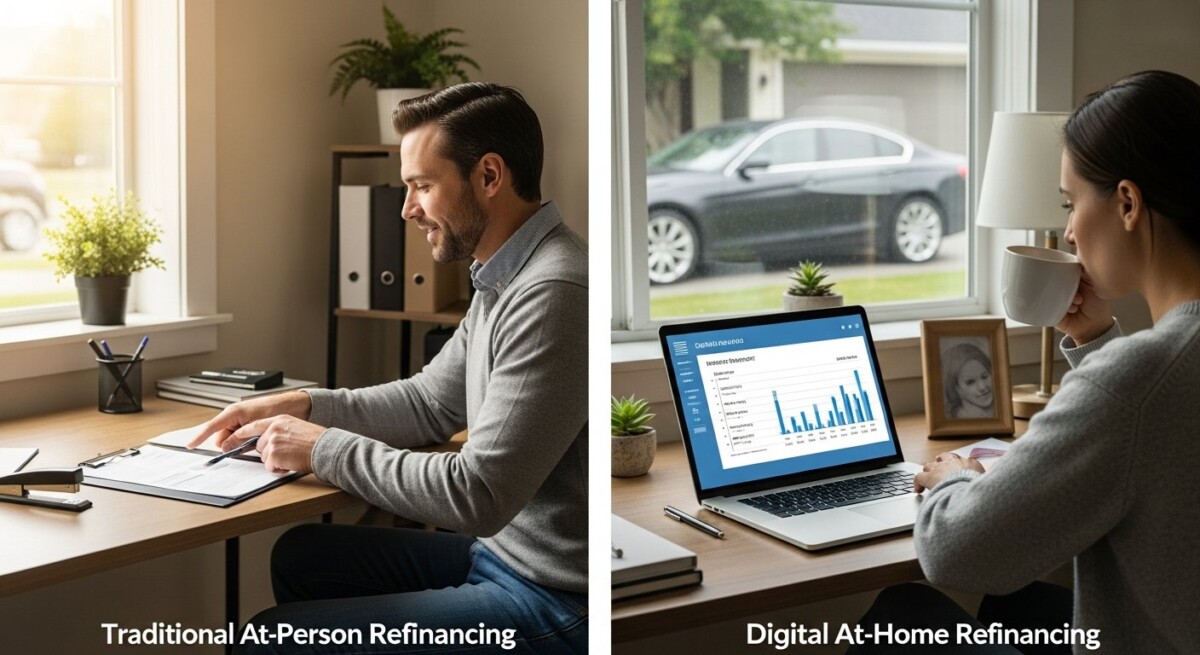
When you decide to refinance your car loan, one of the first forks in the road is choosing between a local lender and an online lender. Both paths can lead to lower monthly payments or a reduced interest rate, but the experience, speed, and flexibility differ significantly. Understanding these differences is essential to making a decision that saves you money and fits your lifestyle. This article provides a clear comparison of local versus online lenders for auto refinancing, helping you weigh the pros and cons based on your credit profile, time horizon, and comfort with digital tools.
How Local Lenders Work for Auto Refinancing
Local lenders include community banks, credit unions, and small regional financial institutions. These organizations often have deep roots in their communities and emphasize personal relationships. When you approach a local lender for auto refinancing, you typically sit down with a loan officer who reviews your financial situation face to face. This personal interaction can be reassuring, especially if you have questions about the refinancing process or need help understanding your options.
Credit unions, in particular, are known for offering competitive rates on auto refinancing. Because they are member-owned, they often pass savings back to borrowers in the form of lower APRs and fewer fees. Many credit unions also offer rate discounts for setting up automatic payments or having a checking account with them. However, membership eligibility can be a barrier. You may need to live in a certain area, work for a specific employer, or belong to an affiliated organization to join.
Local banks and credit unions also tend to have more flexible underwriting criteria. They may be willing to work with borrowers who have less-than-perfect credit or unique financial circumstances. The loan officer can review your entire financial picture, including income stability and debt-to-income ratio, rather than relying solely on a credit score. This human element can be a significant advantage if your credit history has blemishes or if you are self-employed.
The Advantages of Online Lenders for Auto Refinancing
Online lenders operate entirely through digital platforms. They use automated systems to evaluate applications, verify income, and disburse funds. This technology-driven approach allows them to process applications quickly, often providing a decision within minutes. For borrowers who value speed and convenience, online lenders are an attractive option. You can complete the entire refinancing process from your smartphone or laptop without ever stepping into a branch.
Online lenders also offer broader access to competitive rates. Because they serve a national audience, they can aggregate capital from multiple sources and pass the savings to borrowers. Many online platforms allow you to compare loan offers from several lenders with a single application, a process known as rate shopping. This transparency helps you find the lowest possible rate without visiting multiple institutions.
Another benefit of online lenders is their focus on technology. Many offer features like digital document upload, e-signatures, and real-time loan tracking. These tools streamline the refinancing process and reduce the time it takes to close the loan. Some online lenders even offer prequalification with a soft credit pull, so you can see your potential rate without affecting your credit score. This feature is particularly useful when comparing local vs online lenders for auto refinancing because it allows you to evaluate offers risk-free.
Comparing Local vs Online Lenders for Auto Refinancing: Key Factors
To make an informed choice, you need to evaluate several factors side by side. The following list breaks down the most important considerations when comparing local vs online lenders for auto refinancing.
- Interest Rates and Fees: Online lenders often advertise lower starting rates due to lower overhead costs. However, local credit unions may offer promotional rates for members that beat online offers. Always compare the APR, which includes fees, not just the interest rate.
- Speed of Funding: Online lenders typically fund loans faster, sometimes within 24 to 48 hours. Local lenders may take several days to a week because they require in-person document review and manual underwriting.
- Customer Service: Local lenders provide face-to-face support, which can be invaluable if you encounter problems or have questions. Online lenders offer customer service via phone, chat, or email, but you miss the personal touch.
- Credit Flexibility: Local lenders are more likely to consider nontraditional credit data, such as rental payment history or utility bills. Online lenders rely heavily on credit scores and automated algorithms.
- Loan Terms and Options: Online lenders often offer a wider range of loan terms, from 24 to 84 months. Local lenders may have more limited term options but may offer more flexible prepayment penalties or no prepayment penalties at all.
After reviewing these factors, you should prioritize what matters most to you. If saving the most money on interest is your primary goal, focus on finding the lowest APR regardless of lender type. If you need personalized guidance and have a unique financial situation, a local lender may be the better fit. Many borrowers find that a hybrid approach works best: they research rates online and then visit a local credit union to see if they can match or beat the offer.
Credit Score Impact and Approval Odds
Your credit score plays a significant role in which lenders are available to you. Online lenders generally cater to borrowers with good to excellent credit, typically scores above 680. If your score falls below that threshold, you may face higher rates or be declined by many online platforms. Local lenders, particularly credit unions, are often more accommodating to borrowers with scores in the 600 to 680 range. They may also offer credit builder programs or refinancing options specifically designed for those rebuilding credit.
It is important to note that applying for refinancing with multiple lenders can temporarily lower your credit score due to hard inquiries. However, credit scoring models treat multiple inquiries for the same type of loan within a short period (usually 14 to 45 days) as a single inquiry. This means you can shop around without significant damage to your score. When comparing local vs online lenders for auto refinancing, plan to submit all applications within a focused window to minimize the credit impact.
If you have bad credit, you may want to start with local lenders. Many credit unions offer secured auto refinance loans or require a cosigner, which can help you qualify. Online lenders that specialize in bad credit refinancing do exist, but they often charge higher interest rates and origination fees. In our guide on bad credit auto refinance lenders in Louisiana, we explain how to navigate these options and find a lender that works with your credit profile.
Technology and Convenience: The Online Advantage
One of the strongest arguments for choosing an online lender is convenience. The entire process, from application to funding, can happen without leaving your home. You can upload your pay stubs, driver’s license, and vehicle registration using a smartphone app. Many online lenders also integrate with your bank to verify income and assets electronically, reducing paperwork. This speed and efficiency can be a game-changer if you need to lower your monthly payment quickly or if you are refinancing to take advantage of a temporary rate drop.
Online lenders also provide robust tools for comparing offers. Some platforms allow you to enter your loan details once and receive multiple quotes from different lenders. This transparency helps you see the full range of rates and terms available to you. Additionally, online lenders often have lower overhead costs than brick-and-mortar institutions, which can translate into lower rates and fewer fees. However, you must be comfortable with digital communication and self-service. If you prefer to discuss your loan with a person in a branch, the online experience may feel impersonal.
When Local Lenders Make More Sense
Local lenders shine in situations that require human judgment and flexibility. If you have a complex financial situation, such as being self-employed or having irregular income, a loan officer can manually review your tax returns and bank statements to assess your ability to repay. Online algorithms may automatically reject applications that do not fit standard criteria, even if you are a good credit risk. Local lenders also tend to have stronger relationships with their members, which can lead to better service if you encounter financial hardship later.
Another scenario where local lenders excel is when you want to consolidate multiple debts or need a loan with unique terms. For example, some credit unions offer skip-a-payment programs or allow you to refinance with no origination fee. These perks can add significant value over the life of the loan. Additionally, local lenders often have lower prepayment penalties, making it easier to pay off your loan early without extra costs.
If you value community impact, choosing a local lender keeps your money within the local economy. Credit unions and community banks reinvest deposits into local loans and services, which can benefit your neighborhood. For borrowers who prioritize social responsibility alongside financial savings, this is an important consideration.
Frequently Asked Questions
Which type of lender offers the lowest rates for auto refinancing?
Online lenders often advertise the lowest starting rates due to lower overhead, but local credit unions can match or beat those rates for members with strong credit. The best way to find the lowest rate is to get quotes from both types of lenders and compare the APR, which includes fees. Rate shopping within a short window protects your credit score.
Can I refinance with a local lender if I live in a remote area?
Yes, many local lenders serve rural areas and offer online application options. However, if you prefer in-person service, you should confirm that a branch is within a reasonable distance. Some credit unions also have shared branching networks that allow you to conduct transactions at other credit unions nationwide.
Do online lenders charge hidden fees?
Reputable online lenders disclose all fees upfront in the loan estimate. Common fees include origination fees, title transfer fees, and late payment fees. Always read the fine print and compare the total cost of the loan, not just the monthly payment. Local lenders may have fewer fees but higher interest rates, so a full comparison is essential.
How long does the refinancing process take with each type of lender?
Online lenders can fund a loan in as little as 24 hours after application. Local lenders typically take three to seven business days because of manual underwriting and document review. If you need funds quickly, an online lender is usually the faster option.
Making Your Final Decision
Choosing between a local and an online lender for auto refinancing depends on your priorities. If you value speed, convenience, and access to a wide range of rates, an online lender is likely your best bet. If you need personalized service, have a unique financial situation, or want to support your local economy, a local lender or credit union may be the better choice. Many successful borrowers use a two-step approach: they gather online quotes to establish a baseline and then visit a local lender to see if they can beat the offer. This strategy ensures you get the best possible rate without sacrificing the benefits of either option.
No matter which path you choose, the key is to act. Refinancing can lower your monthly payment, reduce your interest rate, or shorten your loan term, all of which improve your financial health. For additional support, you can explore resources like Doctors Home for broader financial wellness tips. By understanding the differences between local and online lenders, you are already one step closer to a smarter auto loan.