
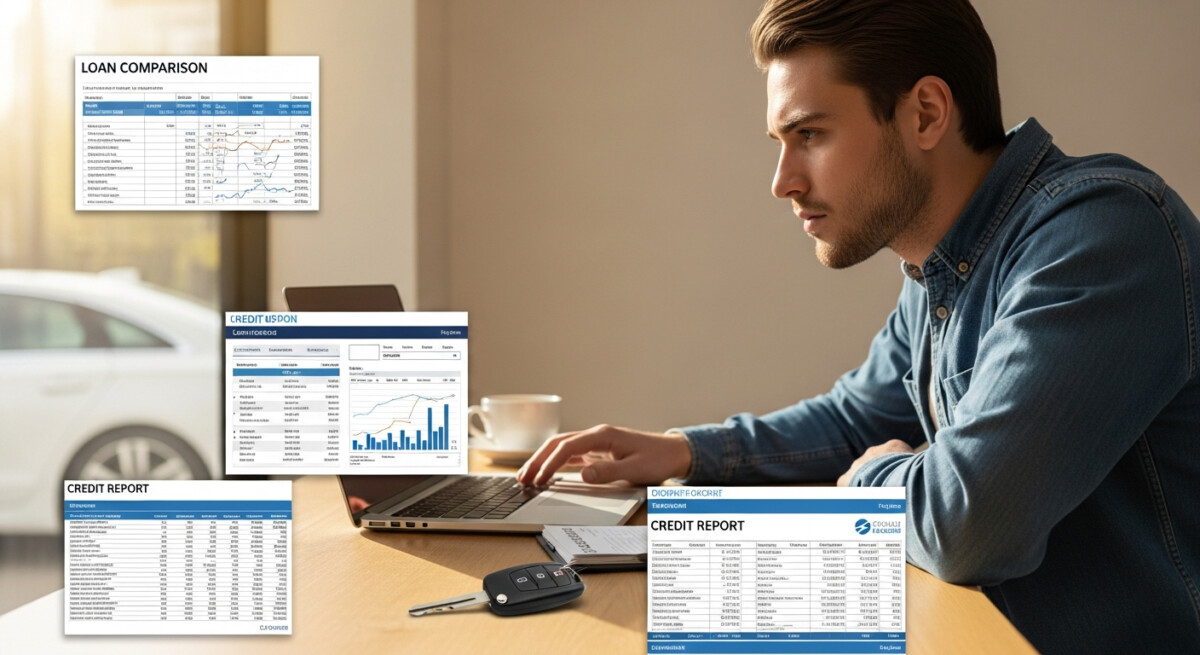
When you walk onto a car lot or apply for financing online, the first thing lenders evaluate is your credit score. This three-digit number does more than just determine approval. It directly shapes the auto loan interest rate based on credit score that you are offered. A difference of 50 points can cost you thousands of dollars over the life of a loan. Understanding this connection is the first step toward saving money on your next vehicle purchase or refinance.
Lenders use credit scores to gauge risk. Borrowers with higher scores are seen as more likely to repay on time, so they receive lower rates. Those with lower scores are considered riskier, and lenders compensate by charging higher interest. This system affects every car buyer, whether you are shopping for a new sedan, a used SUV, or refinancing an existing loan. The good news is that knowledge gives you power. Once you understand how rates are set, you can improve your financial position before you apply.
In this article, we break down exactly how credit scores influence auto loan pricing, what rates you can expect at different score tiers, and practical steps to secure the best possible deal. We also explore how platforms like CarLoanRefinancing.com can help you compare offers across a nationwide network of lenders, potentially lowering your monthly payment by $100 or more.
How Credit Scores Determine Auto Loan Rates
Auto lenders do not use a single universal rate chart. Instead, each lender sets its own pricing based on internal risk models. However, most lenders rely on FICO Auto Scores, a specialized version of the standard FICO score that predicts the likelihood of default on auto loans. These scores range from 250 to 900, with higher scores signaling lower risk.
Your credit score affects two main aspects of your loan: the annual percentage rate (APR) and the loan terms you qualify for. A higher score not only lowers your APR but also gives you access to longer terms, lower fees, and better overall conditions. Conversely, a lower score may limit you to shorter terms, higher down payments, or subprime lenders who charge elevated rates.
To give you a clearer picture, here is a breakdown of typical auto loan interest rates by credit score tier. These figures represent averages from major consumer lending databases and can fluctuate based on market conditions, loan duration, and whether the vehicle is new or used.
- Excellent (780-850): New car rates around 2.0% to 4.0% APR. Used car rates around 3.0% to 5.0% APR.
- Good (700-779): New car rates around 3.0% to 6.0% APR. Used car rates around 4.0% to 8.0% APR.
- Fair (620-699): New car rates around 6.0% to 12.0% APR. Used car rates around 8.0% to 15.0% APR.
- Poor (580-619): New car rates around 12.0% to 18.0% APR. Used car rates around 15.0% to 22.0% APR.
- Deep Subprime (below 580): New car rates often exceed 18.0% APR. Used car rates can reach 25.0% APR or higher.
These ranges show why the auto loan interest rate with 700 credit score is significantly better than what someone with a 620 score receives. Even a one-percentage-point difference on a $30,000 loan over 60 months translates to nearly $900 in extra interest. Over longer terms, the gap widens further.
Auto Loan Interest Rate Based on Credit Score: Detailed Breakdown by Tier
Excellent Credit (780-850)
Borrowers in this tier receive the most favorable rates. Lenders compete for your business, often offering promotional rates as low as 1.99% APR on new cars. For used cars, the used car interest rate excellent credit tier typically ranges from 3.0% to 5.0% APR. You also have the strongest negotiating position. Dealers and banks will often match or beat competitor offers to secure your loan. If you have excellent credit, you should always shop multiple lenders to find the absolute lowest rate.
Good Credit (700-779)
This is a common range for many American car buyers. The auto loan interest rate with 700 credit score is still quite favorable, often landing between 3.0% and 6.0% for new cars. Lenders view you as a reliable borrower, but you may not qualify for the lowest promotional rates. This tier is a sweet spot for refinancing. If you originally financed with a lower score, improving your credit to 700 or above can unlock substantial savings through refinancing. According to CarLoanRefinancing.com, customers who refinance often lower their APR by 50 basis points or more, saving an average of $100 per month.
Fair Credit (620-699)
Borrowers in this range face higher rates, typically 6.0% to 12.0% APR for new cars. Lenders see you as having some risk factors, such as past late payments or high credit utilization. You may still qualify for prime loans, but the terms will be less attractive. This is a critical time to focus on credit improvement. Paying down credit card balances, disputing errors on your credit report, and making all payments on time can help you move into the good tier within six to twelve months. Even a small improvement can reduce your rate by several percentage points.
Poor Credit (580-619)
This tier is considered subprime. Rates range from 12.0% to 18.0% APR for new cars and higher for used vehicles. Lenders will require larger down payments, sometimes 20% or more of the vehicle’s value. You may also face shorter loan terms and additional fees. The best strategy in this tier is to improve your credit before buying, or to consider a co-signer with good credit. If you must finance now, focus on a shorter loan term to minimize total interest paid. After six months of on-time payments, explore refinancing options to escape the subprime rate.
Deep Subprime (Below 580)
Borrowers in this range face the highest rates, often exceeding 20% APR. Many traditional lenders will not approve you at all. You may need to seek financing from buy-here-pay-here dealerships or specialized subprime lenders. These loans carry significant risk of default and can trap you in a cycle of debt. The most powerful step you can take is to delay your purchase and work on rebuilding your credit. Even moving from deep subprime to poor credit can cut your rate in half.
Factors Beyond Credit Score That Influence Your Rate
While your credit score is the biggest single factor, lenders consider other elements when setting your auto loan interest rate based on credit score. Understanding these can help you optimize your application.
Loan-to-Value Ratio (LTV). This compares the loan amount to the vehicle’s value. A lower LTV (meaning a larger down payment or a less expensive car) reduces lender risk and can lower your rate. Aim for a down payment of at least 10% to 20%.
Loan Term. Shorter terms (36 or 48 months) typically have lower rates than longer terms (72 or 84 months). However, shorter terms mean higher monthly payments. Balance affordability with total interest cost.
Vehicle Age and Mileage. New cars usually have lower rates than used cars because they hold value better and are less likely to require major repairs. However, the used car interest rate excellent credit tier can still be very competitive if you have strong credit.

Debt-to-Income Ratio (DTI). Lenders check your monthly debt payments against your gross income. A DTI below 36% is ideal. Higher DTI may result in a rate increase or denial.
Employment History. Stable employment with consistent income reassures lenders. Job changes or gaps can raise concerns and potentially increase your rate.
How to Improve Your Credit Score Before Applying
If your current score is below 700, taking a few months to improve it can save you thousands. Here are actionable steps you can take today.
First, check your credit reports from Equifax, Experian, and TransUnion at AnnualCreditReport.com. Look for errors such as incorrect late payments, accounts that are not yours, or outdated negative items. Dispute any inaccuracies with the credit bureau. This alone can boost your score by 20 to 50 points. Second, reduce your credit card utilization. Aim to keep balances below 30% of your credit limits. Paying down high balances has a rapid positive effect on your score. Third, make all payments on time. Payment history accounts for 35% of your FICO score. Even one late payment can cause a significant drop.
Finally, avoid applying for new credit in the months before your auto loan application. Each hard inquiry can lower your score by a few points, and multiple inquiries suggest risk to lenders. Instead, do your rate shopping within a 14- to 45-day window so that multiple inquiries count as one for scoring purposes.
Refinancing: A Path to Better Rates Regardless of Initial Credit
If you already have a car loan with a high rate, refinancing can help you capture a lower auto loan interest rate based on credit score improvements. Even if your credit has only improved by 30 or 40 points, you may qualify for a significantly lower APR. CarLoanRefinancing.com connects you with a nationwide network of lenders, allowing you to compare offers without multiple hard inquiries. The process is fast and free, and you can often get answers within one hour.
Refinancing is especially powerful for borrowers who originally financed with subprime rates. As your credit improves, you can move from a 15% APR to a 6% APR, saving hundreds per month. The site’s customers save an average of $100 or more per month and lower their APR by 50 basis points. To learn more about current market trends and what to expect, read our guide on Current Car Loan Interest Rates: What Borrowers Expect. This resource provides additional context on rate movements and timing your refinance for maximum benefit.
Frequently Asked Questions
What is the average auto loan interest rate based on credit score?
Averages vary by lender and market conditions, but typical ranges are: excellent credit 2.0% to 4.0% APR, good credit 3.0% to 6.0% APR, fair credit 6.0% to 12.0% APR, poor credit 12.0% to 18.0% APR, and deep subprime above 18.0% APR.
Can I get a car loan with a 500 credit score?
Yes, but you will likely be limited to subprime lenders offering rates above 20% APR. A large down payment and a co-signer can improve your chances. Refinancing after six to twelve months of on-time payments is strongly recommended.
What is a good auto loan interest rate with 700 credit score?
A 700 credit score typically qualifies you for rates between 3.0% and 6.0% APR on new cars and 4.0% to 8.0% APR on used cars. Shopping multiple lenders can help you secure the lower end of this range.
Does refinancing hurt my credit score?
A hard inquiry from a refinance application can temporarily lower your score by a few points. However, the long-term benefit of a lower rate and lower monthly payments usually outweighs this small, temporary dip.
How long does it take to improve credit for a better auto loan rate?
Significant improvement can happen in three to six months. Paying down credit card balances and correcting errors on your credit report often yield the fastest results.
Your credit score is one of the most powerful financial tools you own. By understanding the link between your score and auto loan interest rates, you can make informed decisions that save you money. Whether you are buying a new car, shopping for a used vehicle, or exploring refinancing options, taking the time to improve your credit and compare offers is worth the effort. Platforms like CarLoanRefinancing.com make the comparison process simple and free, helping you find the best rate for your unique financial situation. For those relocating or moving to a new city, managing your auto loan alongside other moving expenses is critical. You can find helpful resources for that transition at Moving Homes.
The road to a better auto loan rate begins with a clear understanding of where you stand today. Check your credit score, review your reports, and take proactive steps to improve. With the right preparation and tools, you can drive away with a loan that works for your budget and your future.