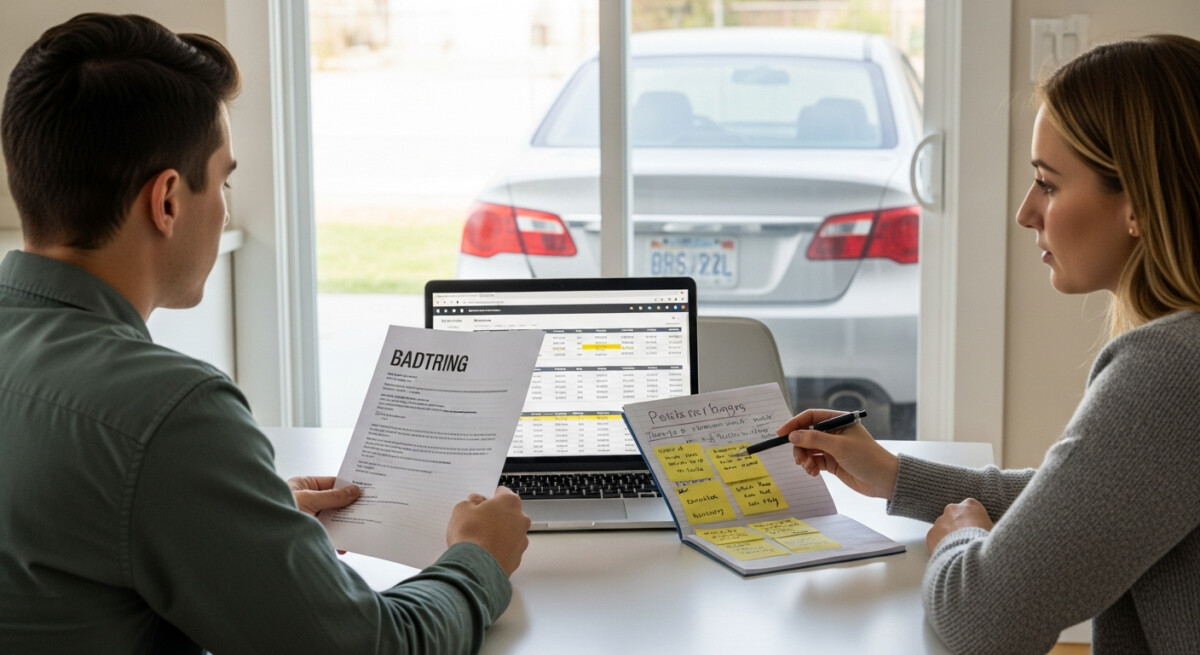
When your auto lease ends, you face a critical financial decision. You can walk away, return the car, or buy it out. But the path you choose depends heavily on auto lease interest rates and lease refinance options available at that moment. Many drivers assume leasing is simpler than buying, yet the numbers behind a lease buyout can be just as complex as a traditional loan. Understanding how lease financing rates work and when to refinance can save you hundreds or even thousands of dollars.
Leasing a vehicle means you pay for depreciation plus interest during the contract term. That interest is baked into your monthly payment as a money factor, which is essentially the lease version of an APR. When you decide to purchase the car at lease end, you need to secure financing for the residual value. This is where auto lease interest rates and lease refinance options come into play. If your credit score has improved or market rates have dropped since you signed the lease, refinancing the buyout could lower your monthly payment significantly.
In this guide, we break down how lease interest rates are calculated, why refinancing a lease buyout makes sense, and how you can compare offers to find the best deal. We also cover common pitfalls like hidden fees and prepayment penalties. Whether you are a first-time lessee or a seasoned driver, these insights help you take control of your vehicle costs.
How Auto Lease Interest Rates Work
Auto lease interest rates are expressed as a money factor, not an APR. A money factor of 0.0025, for example, converts to an APR of about 6% (multiply by 2,400). Dealers often quote the money factor to make the rate look smaller than it is. Understanding this conversion is the first step to evaluating lease financing rates accurately.
The money factor is determined by the lessor’s cost of capital, your credit history, and market conditions. Lessees with excellent credit may see money factors as low as 0.0015 (3.6% APR), while those with average or poor credit might face money factors above 0.004 (9.6% APR). Unlike a traditional auto loan, the money factor on a lease is often negotiable. Dealers may mark it up for profit, so asking for the buy rate (the rate the bank actually charges) can save you money.
When you refinance a lease buyout, you replace the lease contract with a new auto loan. The loan’s APR becomes your new interest rate. This is where auto lease interest rates and lease refinance options intersect. If your credit score has risen or market rates have fallen, refinancing can lock in a lower APR than the original money factor implied.
Why Refinance a Lease Buyout?
Refinancing a lease buyout means you take out a new loan to purchase the leased vehicle from the leasing company. Instead of paying the residual value in cash or through a dealer-financed loan, you work with a lender like those in the CarLoanRefinancing.com network to get competitive terms. The primary reasons to refinance include lowering your monthly payment, reducing your interest rate, or shortening the loan term.
Consider this example: You leased a car three years ago with a residual value of $22,000. Your current money factor was equivalent to a 7.5% APR. Today, your credit score has improved by 50 points, and you qualify for a 4.5% APR auto loan. By refinancing the buyout, you could save roughly $50 to $80 per month, depending on the loan term. Over 60 months, that adds up to $3,000 to $4,800 in savings.
Another scenario involves market rate drops. Even if your credit score stayed the same, a decline in average auto loan rates could make refinancing worthwhile. For example, if lease financing rates were high when you signed but have since fallen by 2%, refinancing the buyout captures that lower rate.
When Refinancing Makes Sense
Refinancing a lease buyout is not always the right move. It makes sense when:
- Your credit score has improved by at least 30 to 50 points since the lease began.
- Current auto loan interest rates are at least 1% to 2% lower than the money factor equivalent APR.
- You plan to keep the vehicle for at least two more years.
- The vehicle’s market value is close to or above the residual value, so you are not underwater.
If any of these conditions apply, compare offers from multiple lenders. The CarLoanRefinancing.com platform lets you check rates without affecting your credit score initially, making it easy to see potential savings.
Lease Buyout Refinance: Step by Step
Refinancing a lease buyout follows a straightforward process. Here is a step-by-step breakdown to help you navigate it confidently.
Step 1: Review Your Lease Contract. Look for the residual value (buyout price), lease end date, and any purchase option fee. Also check if there is a disposition fee if you return the car. Knowing these numbers helps you calculate whether refinancing is worth it.
Step 2: Check Your Credit Score. Obtain your free credit report from annualcreditreport.com or a trusted service. A higher score unlocks better lease financing rates and loan offers. If your score has improved, you are in a stronger position.
Step 3: Research Current Auto Lease Interest Rates. Compare average rates from banks, credit unions, and online lenders. Look for rates that are lower than the money factor equivalent on your lease. The CarLoanRefinancing.com rate comparison tool can show you personalized offers.
Step 4: Get Pre-Approved for a Loan. Submit an application with a lender that handles lease buyouts. Many lenders require the vehicle to be no older than a certain model year (usually current plus 5 to 7 years). Pre-approval gives you a firm rate and loan amount.
Step 5: Complete the Buyout. The lender sends the payoff amount to the leasing company. You sign the loan documents and take ownership of the vehicle. The lender then holds the title until you pay off the loan.
Throughout this process, ask about fees such as origination charges, documentation fees, or prepayment penalties on your lease. Some leasing companies charge a small purchase option fee (often $300 to $500), so factor that into your total cost.
Comparing Lease Financing Rates and Traditional Auto Loans
Lease financing rates (money factors) and traditional auto loan APRs are not directly comparable because they apply to different loan structures. However, you can convert a money factor to an approximate APR by multiplying by 2,400. For example, a money factor of 0.003 equals about 7.2% APR. Use this conversion to evaluate whether refinancing the buyout with a loan is cheaper than sticking with the lease’s implied rate.
One key difference is that lease payments are based on the vehicle’s depreciation plus interest, while loan payments cover the full purchase price plus interest. When you refinance a buyout, you are financing only the residual value (plus any fees). This usually means a smaller principal than a new car loan, which can result in a lower monthly payment even if the APR is similar.
Another factor is loan term. Lease buyout loans typically range from 36 to 72 months. Shorter terms mean higher monthly payments but less total interest. Longer terms lower the payment but increase overall interest cost. Choose a term that fits your budget without stretching too long.
Risks and Pitfalls to Avoid
While refinancing a lease buyout offers clear benefits, there are risks. One common mistake is not checking the vehicle’s market value. If the residual value is higher than what the car is worth, you could end up with negative equity. For instance, if the buyout is $25,000 but the car’s trade-in value is only $22,000, you are $3,000 underwater from day one. In that case, refinancing may not be smart unless you plan to keep the car for years.
Another pitfall is ignoring fees. Some leasing companies charge a disposition fee (typically $300 to $500) if you return the car, but waive it if you buy it out. Read the fine print to avoid paying unnecessary charges. Also, watch for prepayment penalties on your lease contract. While rare, some leases penalize early buyout.
Finally, do not assume that refinancing automatically saves money. Use an auto loan calculator to compare your current lease payment (if you extended month-to-month) or the buyout loan payment versus keeping the lease. The CarLoanRefinancing.com website offers a calculator that factors in your loan amount, APR, and term to show your exact monthly payment.
Frequently Asked Questions
Can you negotiate auto lease interest rates?
Yes. The money factor on a lease is negotiable, just like the APR on a loan. Ask the dealer for the buy rate and compare it to the rate they quote. If your credit is strong, you may qualify for a lower factor.
Is refinancing a lease buyout the same as a used car loan?
It is very similar but may have slightly different requirements. Some lenders treat lease buyout loans as a type of used car loan, while others have specific lease buyout programs. Check with your lender to ensure they offer this option.
How does my credit score affect lease refinance options?
Your credit score directly impacts the APR you qualify for. Higher scores unlock lower rates. If your score has improved since the lease started, refinancing can give you a better rate than the original money factor.
What happens if I return the car instead of buying it out?
You simply turn in the vehicle and pay any excess wear-and-tear charges or mileage overages. You also may owe a disposition fee. You then need to find another vehicle, which could involve a new lease or purchase.
Can I refinance a lease that is not yet ending?
Yes. Some lenders allow early lease buyout refinancing. However, you must pay the remaining lease payments plus the residual value. This is usually only beneficial if the car is worth more than the buyout or if interest rates are very low.
Final Thoughts on Lease Buyout Refinancing
Navigating auto lease interest rates and lease refinance options does not have to be overwhelming. By understanding how money factors convert to APRs and when to refinance, you can make a decision that aligns with your financial goals. The key is to compare offers, check your credit, and run the numbers before committing. For a deeper comparison of financing sources, our guide on Dealership Interest Rates vs Credit Union Auto Financing explains how different lenders stack up for buyout loans.
Remember that every dollar saved on interest is money you can put toward other priorities. Whether you choose to buy out your lease or walk away, being informed puts you in control. If refinancing seems like the right path, start by checking your rate with the CarLoanRefinancing.com network. The process is free, fast, and could save you hundreds per month. For homeowners looking to leverage property equity for vehicle purchases, Doctors Home offers additional financial resources that may complement your auto financing strategy.